


Spine Tumor Surgery
Spine Tumor Surgery from a Memorial Sloan Kettering Fellowship-Trained Neurosurgeon in New Jersey.
A spine tumor diagnosis changes everything. The fear, the uncertainty, the urgent need to find someone who genuinely knows what they are doing — these are real, and they matter. What patients in New Jersey facing a spinal tumor diagnosis deserve to know is that they do not need to travel to New York City to access the level of neurosurgical oncology expertise that this diagnosis requires.
Rishi N. Sheth, MD completed his fellowship in neurosurgical oncology at Memorial Sloan Kettering Cancer Center in New York, training directly under Philip Gutin, MD, the chief of neurosurgery at one of the world’s most respected institutions for the surgical treatment of
cancer affecting the spine and nervous system. That training was not peripheral to Dr. Sheth’s background — it was the capstone of his surgical education, the fellowship that refined his understanding of spinal oncology, surgical decision-making in complex tumor cases, and the technical demands of operating near the spinal cord in patients whose spinal anatomy may be significantly altered by tumor involvement.
He is the only spine neurosurgeon in northern New Jersey with a fellowship specifically in neurosurgical oncology from Memorial Sloan Kettering. For patients with spinal tumors who have been told they need to travel to a major cancer center for evaluation, this distinction means that expert evaluation, surgical planning, and operative care are available closer to home than they may have realized.
At Spine Care New Jersey, every spine tumor patient receives a thorough, unhurried evaluation. Dr. Sheth reviews all imaging personally, explains the diagnosis in terms that make genuine sense, and gives an honest, thoughtful recommendation about what the surgical options are, what the goals of treatment realistically are, and what the patient and their family can expect going forward.
Different Tumor Types and Locations Require Different Surgical Strategies.
Spine tumor surgery is not a single operation. It is a family of procedures, each designed for a specific type of tumor in a specific location, with surgical goals that vary depending on whether the tumor is primary or metastatic, benign or malignant, confined to one level or spanning multiple segments of the spine. Understanding the categories of spine tumor surgery helps patients understand what kind of intervention may be relevant for their specific situation.
Intradural Extramedullary Tumor Resection
Tumors located inside the protective covering of the spinal cord but outside the cord itself — meningiomas, schwannomas, and neurofibromas being the most common — are often benign and grow slowly. Many can be surgically removed in their entirety through a focused posterior approach, with the dura opened carefully to expose and remove the tumor while the spinal cord and adjacent nerve roots are protected. When complete resection is achieved, recurrence rates for these tumors are very low and long-term outcomes are excellent.
Intramedullary Tumor Resection
Tumors that arise within the substance of the spinal cord itself — most commonly ependymomas and astrocytomas — represent the most surgically complex category of spinal tumor. Operating within the spinal cord requires a level of microsurgical precision, neurophysiological monitoring, and oncological judgment that is specifically developed through neurosurgical oncology fellowship training. The goal in intramedullary tumor surgery is to achieve maximum safe resection — removing as much of the tumor as possible while preserving the neurological function the patient currently has.
Metastatic Tumor Decompression and Stabilization
When cancer from elsewhere in the body spreads to the vertebrae or spinal canal, the surgical goals shift from curative resection to neurological preservation and quality of life. Surgery for spinal metastases focuses on decompressing the spinal cord and nerve roots when they are being compressed by tumor, stabilizing the spine when tumor involvement has compromised the structural integrity of the vertebrae, and providing durable pain relief by eliminating the instability and neurological compromise caused by the tumor. These procedures are often combined with radiation therapy or stereotactic radiosurgery as part of a coordinated multidisciplinary treatment plan.
Vertebral Body Resection and Reconstruction
For tumors that have invaded and destroyed one or more vertebral bodies, surgery may involve removing the affected vertebra or vertebrae entirely and reconstructing the spine using instrumentation, bone graft, and in some cases a vertebral body replacement implant. This is one of the most complex categories of spine surgery, requiring the combination of oncological resection technique and advanced spinal reconstruction capability that fellowship training in neurosurgical oncology and spine surgery together provide.
Minimally Invasive Tumor Surgery
For appropriate tumors — particularly epidural metastases causing cord compression where the goal is decompression and stabilization rather than complete resection — minimally invasive surgical approaches using tubular retractors and percutaneous instrumentation can achieve meaningful neurological benefit and spinal stability with significantly less operative trauma and faster recovery than open surgery. This is particularly valuable in patients with systemic cancer who may have limited physiological reserve and for whom minimizing surgical stress is an important consideration.
Vertebroplasty and Kyphoplasty for Pathological Fractures
When tumor involvement of a vertebra has led to a painful compression fracture, vertebroplasty or kyphoplasty can stabilize the fracture and provide significant, rapid pain relief through a needle-based procedure without the need for open surgery. These procedures are highly effective for appropriate patients with metastatic disease and vertebral fractures, and they can often be performed on an outpatient or short-stay basis.
Understanding What Surgery Can Realistically Achieve — and Why Honesty Matters.
One of the most important conversations Rishi N. Sheth, MD has with spine tumor patients is about the goals of surgery. Those goals vary enormously depending on the tumor type, and understanding them accurately is essential for patients and their families to make informed decisions about their care.
For patients with benign primary spinal tumors such as meningiomas and schwannomas, the surgical goal is typically complete or near-complete resection, with cure as a realistic expectation in many cases. The priority is removing the tumor while preserving the neurological function that the surrounding spinal cord and nerve roots provide.
For patients with malignant primary tumors such as ependymomas or astrocytomas, the goal is maximum safe resection — taking as much tumor as possible while protecting the patient's neurological function. This requires constant intraoperative neurophysiological monitoring and careful real-time decision-making about where the boundary between tumor and functional spinal cord tissue lies.
For patients with metastatic spine disease, the goals are different and should be stated clearly. Surgery for spinal metastases is almost never curative — the cancer has already spread. The goals are to prevent or reverse neurological deterioration from spinal cord compression, stabilize the spine to relieve pain and allow mobilization, and maintain or restore the quality of life that allows patients to continue their systemic cancer treatment and spend meaningful time with their families. These are profoundly important goals, and achieving them through well-executed surgery makes a real difference in the lives of patients with metastatic disease.
Dr. Sheth discusses these goals honestly and specifically with every spine tumor patient. There is no value in false optimism, and there is no value in unnecessary pessimism. What every patient deserves is a clear, accurate understanding of what surgery can accomplish for their specific situation.
From Evaluation Through Recovery A Comprehensive Care Approach.
Preoperative Evaluation
The evaluation of a spine tumor patient at Spine Care New Jersey begins with a thorough review of all available imaging, including MRI with and without contrast, CT scanning for bony anatomy, and any PET or systemic imaging available for patients with known cancer. Rishi N. Sheth, MD reviews this imaging personally before the consultation appointment so that the conversation can be substantive and specific from the outset.
For patients with metastatic disease or suspected malignant primary tumors, coordination with medical oncology and radiation oncology is arranged early in the evaluation process. Dr. Sheth believes strongly in the multidisciplinary approach to spine tumor care and works collaboratively with oncology partners to ensure that the surgical plan fits within the broader context of the patient's systemic treatment.
Intraoperative neurophysiological monitoring is used for all tumor surgeries near or involving the spinal cord. This real-time monitoring of motor and sensory pathways allows Dr. Sheth to operate with the maximum possible safety margin and to respond immediately if monitoring signals indicate that neural structures are at risk.
The Procedure
The specific procedure depends entirely on the tumor type, location, and surgical goals as discussed above. Procedures range from relatively straightforward posterior resections of extramedullary tumors under the surgical microscope to complex multi-stage vertebral body resections with spinal reconstruction using Mazor robotic-assisted instrumentation. Every procedure is planned individually based on the imaging, the pathology, and the patient's specific clinical circumstances.
Recovery
Recovery after spine tumor surgery varies enormously depending on the extent of the surgery, the preoperative neurological status, and the patient's overall medical condition. For patients who undergo resection of a benign extramedullary tumor, recovery often follows a course similar to other spinal decompression procedures, with hospital stays of one to three nights and return to normal activities over four to eight weeks. For patients who undergo more extensive reconstructive procedures, recovery is longer and is closely monitored by Dr. Sheth throughout.
Neurological recovery after spine tumor surgery, when the spinal cord or nerve roots have been compressed by tumor, can continue for months after decompression as the nervous system gradually recovers from the pressure that had been placed upon it. Patients are encouraged to understand that the full benefit of surgery may not be immediately apparent and that neurological improvement continues well beyond the initial postoperative period.
The Spine Oncology Expertise of Memorial Sloan Kettering. Available in New Jersey.
When a patient receives a diagnosis involving a spinal tumor, the instinct to seek care at a major cancer center is completely understandable. The reputation of institutions like Memorial Sloan Kettering Cancer Center exists for good reason. The question worth asking, however, is not which institution has the best reputation, but rather who trained there and where are they now.
Rishi N. Sheth, MD trained there. He spent his neurosurgical oncology fellowship at Memorial Sloan Kettering under Philip Gutin, MD, immersed in the diagnosis and surgical management of the exact category of spine tumors that patients in New Jersey are now bringing to him. The skills, the judgment, the understanding of when to operate and how to operate, and the appreciation of what surgery can realistically achieve in spinal oncology these were all developed in one of the world's most demanding and specialized neurosurgical training environments.
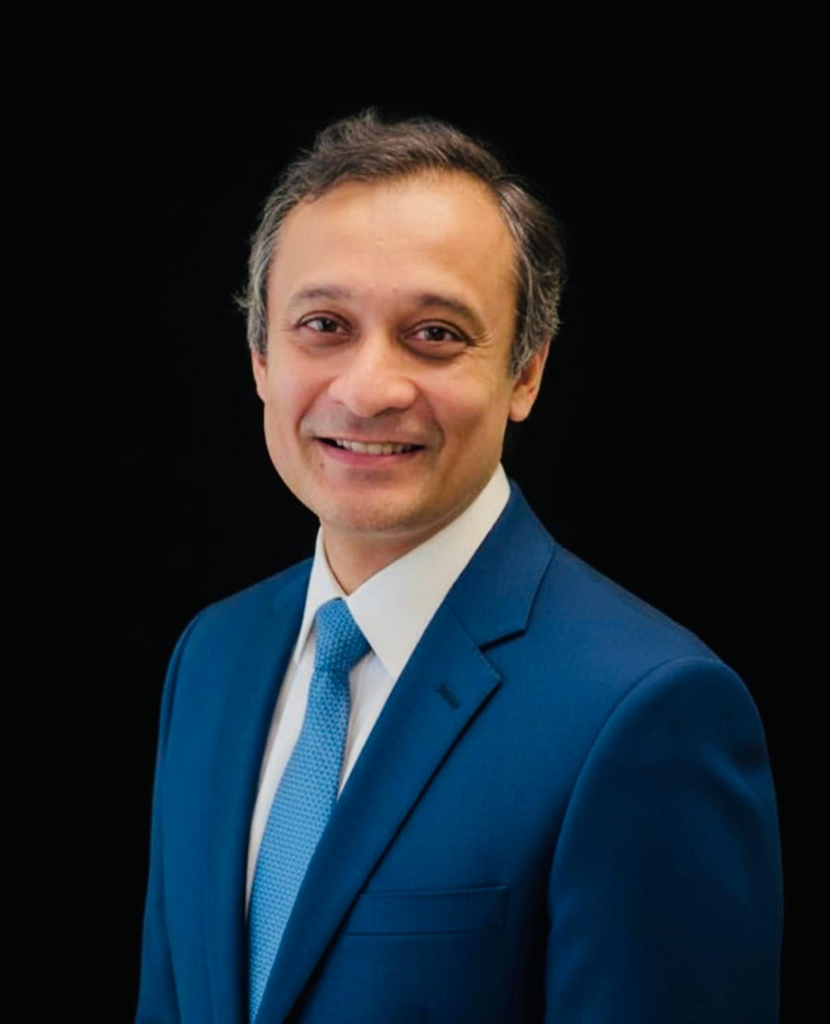
He brings all of that to his patients in New Jersey without requiring them to travel to Manhattan, navigate a major academic hospital system, or wait months for an appointment. At Spine Care New Jersey, spine tumor patients receive the same evaluation and the same surgical expertise in a setting where Dr. Sheth knows their name, has read their imaging before they arrive, and has the time to sit with them and answer every question they have.
His Mazor robotic surgery certification adds a further dimension of precision to reconstructive spine procedures in the tumor context, where accurate instrumentation placement in potentially compromised vertebral anatomy is especially important.

Facing a spine tumor diagnosis and not sure where to turn?
Submit your imaging for a review by Rishi N. Sheth, MD — a Memorial Sloan Kettering fellowship-trained neurosurgical oncologist who practices in New Jersey.
Common Questions About Spine Tumor Surgery at Spine Care New Jersey.
Spine tumor surgery is a procedure used to remove tumors located in or around the spine to relieve pain, reduce nerve pressure, and improve spinal stability and function.
Surgery may be recommended when a spinal tumor causes severe pain, weakness, numbness, difficulty walking, spinal instability, or pressure on the spinal cord.
No. Spinal tumors can be either benign (non-cancerous) or malignant (cancerous). Treatment depends on the tumor’s type, size, and location.
Common symptoms include persistent back or neck pain, numbness, tingling, muscle weakness, balance problems, and changes in bowel or bladder function.
Yes. In some cases, minimally invasive techniques can be used to remove spinal tumors with smaller incisions, less tissue damage, and faster recovery times.
Recovery varies depending on the complexity of the procedure and the patient’s overall health. Some patients recover within weeks, while others may need several months of rehabilitation.
As with any surgery, risks may include infection, bleeding, nerve damage, spinal fluid leaks, or complications related to anesthesia. Your surgeon will discuss these risks before treatment.
Some patients may require radiation therapy, chemotherapy, or follow-up imaging after surgery, depending on the type and stage of the spinal tumor.